Game Overview ✨
Sagar Skillful Hurler represents one of India's most cherished traditional throwing games, with origins tracing back several centuries in the coastal regions of the country. This precision-based sport combines elements of accuracy, strength, and strategic thinking in a unique gameplay format that has been passed down through generations.
The core objective of Sagar Skillful Hurler involves players hurling specially designed projectiles toward designated targets, with scoring based on both accuracy and technique. The game's name derives from the Sanskrit word "Sagar" meaning ocean, reflecting its coastal origins, while "Hurler" describes the throwing action central to gameplay.

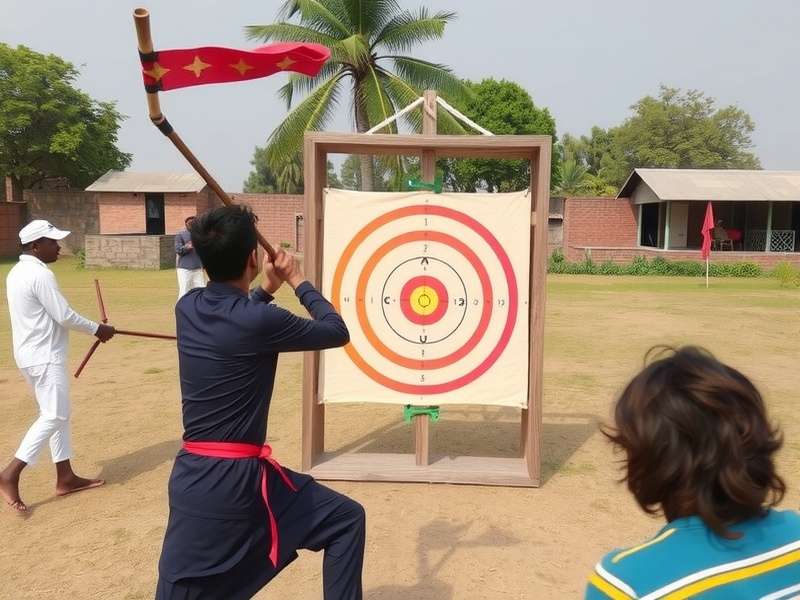
Traditional Sagar Skillful Hurler gameplay demonstrating proper throwing technique
What distinguishes Sagar Skillful Hurler from similar throwing games is its unique scoring system that rewards not just accuracy but also the elegance and form of the throw. Players must master various throwing styles, each with specific applications depending on distance, wind conditions, and target positioning.
The cultural significance of this game extends beyond mere recreation, serving as a symbolic representation of precision, focus, and harmony with natural elements. Traditional tournaments often coincide with seasonal festivals, particularly in coastal communities where the game originated.
Historical Origins & Evolution ?
The historical record of Sagar Skillful Hurler dates back approximately 800 years, with the earliest references appearing in medieval texts from the Konkan region. These documents describe community gatherings where participants would demonstrate their hurling skills using smoothed stones and later, specially crafted wooden projectiles.
Archaeological evidence suggests that variations of the game existed in multiple coastal communities, each developing slightly different rules and equipment based on local materials and cultural practices. The standardization of rules began in the early 19th century as transportation improved and inter-village competitions became more common.
"The Sagar Skillful Hurler represents more than just a game; it embodies the coastal communities' relationship with the ocean - requiring both strength to withstand the elements and precision to navigate them."
- Dr. Rajesh Mehta, Cultural Historian
During the British colonial period, the game experienced a decline as Western sports gained popularity in urban centers. However, rural communities preserved the tradition, and in the post-independence era, efforts to revive indigenous Indian games led to a resurgence of interest in Sagar Skillful Hurler.
The late 20th century saw the formal establishment of national competitions and the creation of standardized equipment specifications. In 1998, the All India Sagar Skillful Hurler Federation was formed, marking a significant milestone in the game's modernization and organized promotion.
Today, Sagar Skillful Hurler enjoys recognition as an important part of India's sporting heritage, with annual national championships and growing international interest. Digital platforms have further expanded its reach, with tutorial videos and virtual competitions introducing the game to global audiences.
Game Rules & Regulations ?
The official rulebook for Sagar Skillful Hurler has evolved over centuries but maintains core principles that honor its traditional origins. Understanding these rules is essential for both players and enthusiasts of this precision sport.
Equipment Specifications
The primary equipment consists of the hurler (projectile) and targets. Traditional hurlers were crafted from specific types of wood, but modern regulations allow composite materials that maintain the original weight and balance characteristics. Official hurlers must weigh between 400-600 grams and have a diameter of 8-10 centimeters.
Targets are typically circular mats placed at varying distances, with concentric scoring zones. The standard competition setup includes three primary targets at distances of 10, 15, and 20 meters, though this can vary based on competition level and venue constraints.
Scoring System
Scoring in Sagar Skillful Hurler combines both quantitative and qualitative elements. The quantitative score is determined by which scoring zone the hurler lands in, with points ranging from 1 (outer ring) to 5 (bullseye).
Official scoring zones and target specifications for competitive Sagar Skillful Hurler
The qualitative score (style points) is awarded by judges based on throwing technique, form, and follow-through. This dual scoring system creates a unique dynamic where players must balance pure accuracy with aesthetic execution, a hallmark of traditional Indian games.
Matches typically consist of multiple rounds, with players taking turns to hurl toward each target. Tournament structures vary from single-elimination formats to cumulative scoring championships held over several days.
Playing Techniques & Strategies ?
Mastering Sagar Skillful Hurler requires developing proficiency in several distinct throwing techniques, each suited to different competitive situations. Professional players typically specialize in 2-3 techniques while maintaining basic competency in all standard forms.
Classical Overhand
The most fundamental technique, characterized by an overhead throwing motion with full arm extension. Provides consistent accuracy at medium distances and is often the first technique taught to beginners.
Wind-Cutter Sidearm
Specialized technique for windy conditions, involving a sidearm motion that creates lateral spin on the hurler, increasing stability in crosswinds. Requires significant practice to master but offers competitive advantage in outdoor venues.
Arc Master
High-arcing throw used for precision landing on distant targets. Creates a steep descent angle that can be advantageous when targeting specific scoring zones behind obstacles or in complex target arrangements.
Power Drive
Low-trajectory, high-velocity throw used in situations requiring force to reach distant targets or penetrate wind resistance. Sacrifices some precision for distance and speed, making it a strategic choice in specific match situations.
Beyond individual techniques, successful Sagar Skillful Hurler competitors develop sophisticated strategic approaches to tournament play. This includes understanding when to employ different techniques based on weather conditions, target positioning, and competitive context.
Advanced players also study opponents' tendencies and adapt their strategy accordingly. The mental aspect of the game is equally important, with focus, concentration, and emotional control being determining factors in high-pressure competition situations.
Cultural Significance & Modern Relevance ?
The cultural footprint of Sagar Skillful Hurler extends far beyond the boundaries of sport, representing important values and traditions within Indian society. The game has historically been associated with festivals, community gatherings, and rites of passage in many regions.
In coastal communities where the game originated, Sagar Skillful Hurler tournaments often coincide with monsoon festivals, symbolizing the community's relationship with the ocean and seasonal cycles. The throwing motion is sometimes interpreted as a symbolic gesture of offering or communication with maritime deities in local folklore.
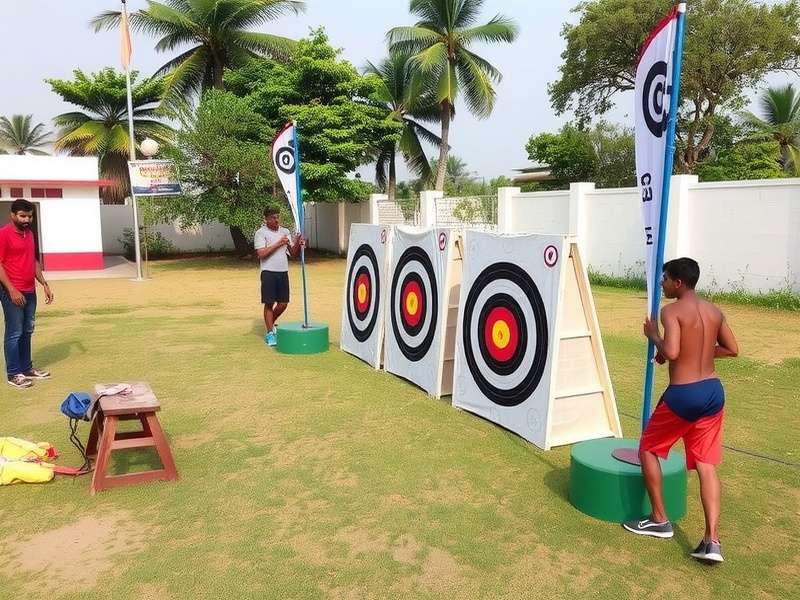
Modern Sagar Skillful Hurler tournament demonstrating the game's ongoing popularity and evolution
The game has also found representation in various art forms, including literature, dance, and visual arts. Several contemporary Indian artists have created works inspired by the elegant motions of Sagar Skillful Hurler, interpreting the game as a metaphor for human aspiration and precision.
In recent decades, efforts to preserve and promote traditional Indian games have brought renewed attention to Sagar Skillful Hurler. Educational programs in some regions have incorporated the game into physical education curricula, introducing younger generations to this aspect of cultural heritage.
The digital age has created new opportunities for the game's preservation and growth. Online communities share techniques, historical information, and organize virtual competitions. Mobile applications simulating Sagar Skillful Hurler gameplay have introduced the sport to international audiences who may not have access to physical equipment.
Looking forward, the future of Sagar Skillful Hurler appears promising as interest in traditional sports continues to grow globally. The game's unique combination of physical skill, mental focus, and cultural significance positions it well for continued relevance in the 21st century sporting landscape.
Training & Development ?️
Becoming proficient in Sagar Skillful Hurler requires a structured approach to training that develops both physical capabilities and technical skills. Traditional training methods have been supplemented with modern sports science approaches to create comprehensive development programs.
Physical conditioning for Sagar Skillful Hurler focuses on developing shoulder stability, core strength, and balance - all essential for consistent throwing performance. Unlike power-based sports, training emphasizes control and precision over raw strength, with many exercises derived from yoga and traditional Indian physical practices.
Technical training typically begins with mastering the basic overhand throw before progressing to more advanced techniques. Video analysis has become an important tool for identifying subtle form issues that can affect accuracy and consistency. Many elite players maintain detailed training journals tracking their progress across various metrics.
Mental preparation represents another critical component of comprehensive training for Sagar Skillful Hurler. Techniques such as visualization, mindfulness, and focus exercises help players maintain concentration during competition. The game's deliberate pace and requirement for precision make mental fortitude as important as physical skill.
Competitive Landscape ?
The competitive structure of Sagar Skillful Hurler has evolved significantly over the past century, transitioning from informal community contests to organized tournaments at local, regional, national, and increasingly international levels.
At the grassroots level, village tournaments remain popular throughout India's coastal regions, often featuring unique local variations of the standard rules. These community events serve both as sporting competitions and social gatherings, preserving the game's traditional cultural context.
The national competitive circuit includes several prestigious tournaments culminating in the annual National Sagar Skillful Hurler Championships. This event brings together top players from across India and has served as a platform for showcasing emerging talent since its establishment in 1985.
International interest in Sagar Skillful Hurler has grown steadily, with demonstration events held in various countries and the formation of clubs in nations with significant Indian diaspora communities. While not yet an Olympic sport, there are ongoing discussions about including traditional games like Sagar Skillful Hurler in multinational sporting events focused on cultural heritage.
The professionalization of the sport has created opportunities for elite players through sponsorships, coaching positions, and equipment endorsements. This economic dimension has contributed to the game's sustainability while raising questions about balancing commercial interests with traditional values.
Equipment Evolution & Innovation ?
The equipment used in Sagar Skillful Hurler has undergone significant evolution while maintaining connection to traditional designs and materials. Understanding this equipment development provides insight into how the game has adapted to changing times.
Traditional hurlers were crafted from specific types of wood known for their density and grain structure, with artisans often spending days shaping and finishing each piece. The selection of wood was considered crucial, with certain varieties believed to impart particular flight characteristics.
Modern manufacturing techniques have introduced composite materials that replicate the performance of traditional woods while offering greater consistency and durability. This standardization has been important for competitive fairness while making the sport more accessible through reduced equipment costs.
Target design has also evolved, with modern targets incorporating electronic scoring systems in elite competitions. These technological advancements have improved scoring accuracy while reducing judging controversies that occasionally arose in traditional tournaments.
Looking forward, equipment innovation continues with research into aerodynamics and materials science. However, traditionalists emphasize the importance of maintaining the essential characteristics that define Sagar Skillful Hurler equipment, ensuring that technological progress doesn't fundamentally alter the game's nature.