Deep Blue Indian Adventure: Complete Encyclopedia
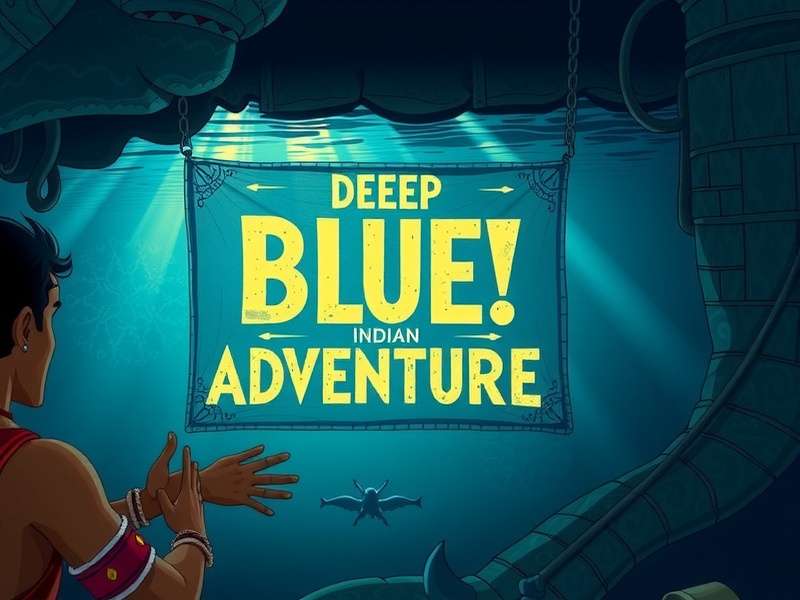
Deep Blue Indian Adventure represents a groundbreaking achievement in the Indian gaming industry,
blending traditional cultural elements with modern gaming technology to create an immersive underwater exploration experience.
Developed by Mumbai-based studio Aqua Interactive, this game has redefined expectations for indigenous game development in South Asia.
The game transports players to the mystical waters surrounding the Indian subcontinent,
where ancient civilizations, marine biodiversity, and supernatural elements converge.
With its release in 2022, Deep Blue Indian Adventure quickly gained international recognition
for its innovative approach to environmental storytelling and cultural preservation.
What sets Deep Blue Indian Adventure apart from other exploration games is its dedication to
authentic representation of Indian maritime history and mythology. The development team collaborated with marine biologists,
historians, and cultural experts to ensure every element reflects the rich tapestry of India's relationship with the ocean.
Key Achievement
Deep Blue Indian Adventure won the "Best Indigenous Game" award at the 2023 India Game Developer Awards,
recognizing its contribution to promoting Indian culture through interactive media.
Gameplay Mechanics & Features ?
The core gameplay of Deep Blue Indian Adventure revolves around underwater exploration,
puzzle-solving, and narrative progression. Players control marine archaeologist Arjun Sharma as he investigates
mysterious phenomena in the Indian Ocean, uncovering secrets that bridge ancient history with contemporary environmental issues.
Movement mechanics feature realistic swimming physics with intuitive controls optimized for both casual and experienced gamers.
The diving system includes oxygen management, depth pressure considerations, and equipment upgrades that progressively unlock new exploration areas.
Exploration System
The game world is structured across seven distinct marine biomes, each with unique ecosystems, challenges, and visual design.
From the coral reefs of Lakshadweep to the deep trenches of the Bay of Bengal, every location offers meticulously crafted environments.
Exploration is rewarded with discoverable artifacts, marine life documentation, and environmental storytelling elements.
The game features a dynamic day-night cycle and weather system that affects visibility, marine behavior, and puzzle accessibility.
Puzzle Mechanics
Puzzles in Deep Blue Indian Adventure draw inspiration from Indian mathematical traditions,
architectural principles, and mythological patterns. Players encounter temple mechanisms,
celestial alignments, and water flow puzzles that require both logical thinking and environmental observation.
Combat & Interaction
Unlike traditional action games, Deep Blue Indian Adventure emphasizes non-violent conflict resolution.
Players use sonar technology, environmental manipulation, and animal communication to navigate challenges
rather than combat. This design philosophy aligns with the game's themes of harmony and environmental stewardship.
Story & Narrative Architecture ?
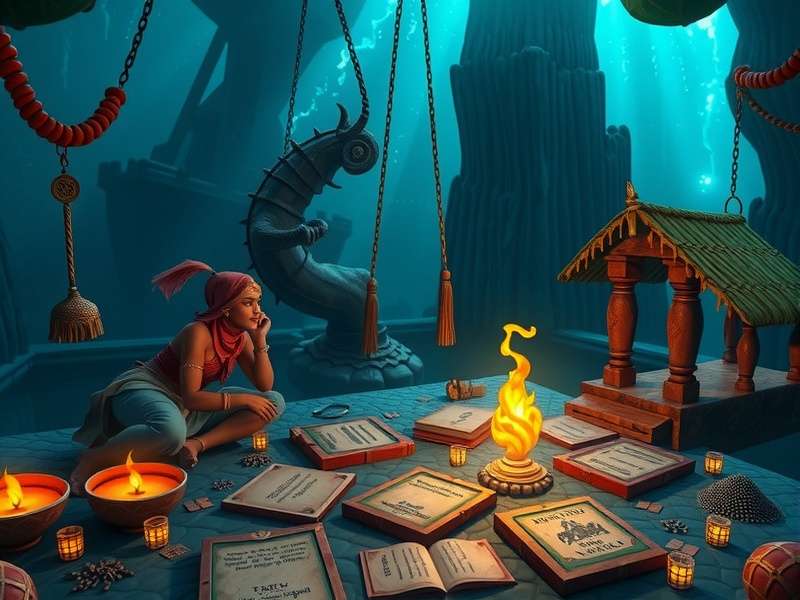
The narrative of Deep Blue Indian Adventure unfolds through environmental clues,
discovered artifacts, and interactions with non-player characters. The main storyline follows Arjun's personal journey
to understand his family's connection to ancient maritime traditions while investigating unusual oceanic phenomena.
"The ocean remembers what the land forgets. In its depths lie stories older than civilizations,
waiting for those who know how to listen." - Ancient Mariner's Proverb featured in Deep Blue Indian Adventure
Central to the plot is the discovery of the "Samudra Manthan" phenomenon - a modern manifestation
of the ancient churning of the ocean myth from Hindu scriptures. This event causes legendary artifacts
and mythical beings to reappear, threatening the ecological balance of the Indian Ocean.
Thematic Elements
The game explores themes of cultural memory, environmental conservation, and the intersection of
tradition with modernity. Through Arjun's journey, players encounter perspectives on India's maritime history
that challenge conventional historical narratives and highlight the country's deep connection to oceanic exploration.
Secondary storylines address contemporary issues such as plastic pollution, coral bleaching,
and sustainable fishing practices. These elements are woven seamlessly into the gameplay,
creating awareness without compromising entertainment value.
Mythological Integration
The game masterfully integrates elements from Indian mythology including references to
Matsya Avatar, Nagas, Makara, and other aquatic deities and creatures from Hindu and
regional folklore, reinterpreted through an ecological lens.
Character Development & Archetypes ?
Deep Blue Indian Adventure features a diverse cast of characters
representing various aspects of Indian coastal communities. From traditional fisherfolk to modern marine scientists,
each character contributes to the game's rich tapestry of perspectives on ocean conservation.
Main Protagonist: Arjun Sharma
Arjun Sharma serves as the player's avatar - a marine archaeologist with a personal connection to the game's central mystery.
His character arc explores the tension between scientific rationalism and cultural traditions,
as he gradually accepts the validity of both approaches to understanding the ocean's secrets.
Arjun's equipment progression mirrors his personal growth, with each upgrade representing
his increasing understanding of both modern technology and ancient wisdom. His background as
someone torn between urban professional life and his coastal roots makes him a relatable figure for contemporary Indian audiences.
Supporting Characters
Dr. Priya Menon serves as the scientific voice in the narrative - a marine biologist
providing factual context for the supernatural events. Her character represents the modern
Indian scientific community's engagement with traditional knowledge systems.
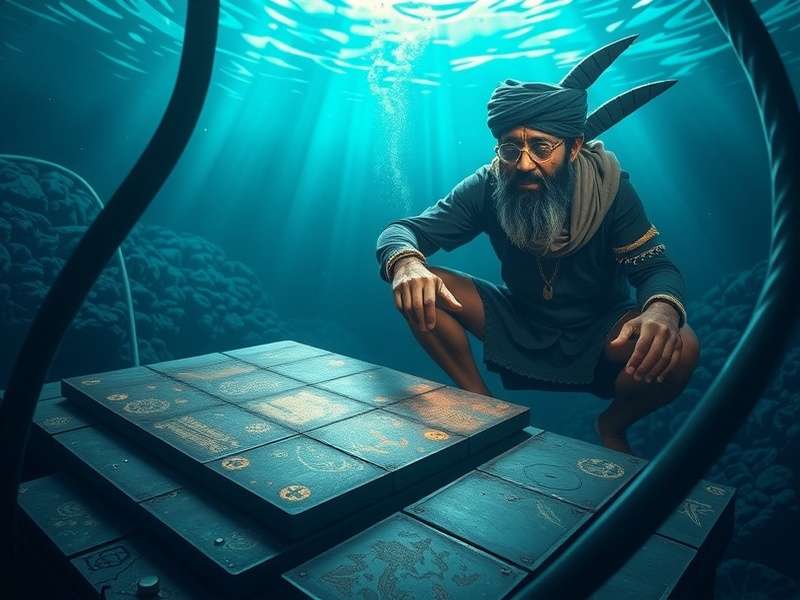
Old Man Sebastian, a descendant of ancient navigators, embodies traditional maritime knowledge.
His character provides mythological context and serves as a bridge between Arjun's scientific training
and the mystical elements of the story.
The game also features numerous marine creatures as "characters" with distinct behaviors and ecological roles.
From intelligent dolphins to ancient sea turtles, these non-human characters contribute significantly to the game's environmental narrative.
Game World & Environmental Design ?
The world of Deep Blue Indian Adventure spans the entire Indian Ocean region,
with particular focus on areas of cultural and ecological significance. Each location is meticulously designed
to balance realism with mythological elements, creating environments that feel both familiar and fantastical.
Marine Biomes
The game features seven distinct marine environments: Coral Gardens (shallow reef systems),
Kelp Forests (temperate coastal areas), Mangrove Labyrinths (estuarine ecosystems),
Open Ocean (pelagic zone), Deep Trenches (abyssal plain), Underwater Ruins (archaeological sites),
and Mythical Realms (supernatural areas blending reality and mythology).
Each biome features unique visual design, soundscapes, gameplay mechanics, and narrative elements.
The transition between biomes is carefully managed to create a sense of progression and discovery.
Ecological Accuracy
The development team worked with marine biologists from Indian research institutions
to ensure accurate representation of local ecosystems. Over 200 species of Indian Ocean marine life
are depicted with realistic behaviors and ecological relationships.
Architectural Elements
Underwater ruins draw inspiration from various Indian architectural traditions including
Dravidian, Nagara, and Kalinga styles. These structures incorporate authentic design elements
while adapting them for underwater environments and gameplay functionality.
The game's mythical realms feature architecture inspired by descriptions in ancient texts
like the Puranas and regional folklore, interpreted through a contemporary design sensibility
that maintains their otherworldly quality while ensuring navigability.
Development History & Technical Innovation ?
The development of Deep Blue Indian Adventure began in 2018 as a passion project
by a small team of Indian developers seeking to create a game that reflected their cultural heritage.
Over four years, the project evolved into a major production with funding from both private investors
and government cultural grants.
The team faced significant technical challenges in creating believable underwater physics,
fluid dynamics, and lighting effects. Their solution involved developing proprietary rendering
techniques that efficiently simulated light refraction, caustics, and particulate matter in water.
Cultural Research & Authenticity
Development included extensive fieldwork along India's coastline, documenting marine ecosystems,
interviewing coastal communities, and studying maritime traditions. The team consulted with historians
specializing in India's naval history and anthropologists studying coastal cultural practices.
Mythological elements were researched through ancient texts, regional folklore collections,
and consultations with religious studies scholars. The team aimed to represent these elements
respectfully while adapting them for interactive storytelling.
Technical Innovation
The game's engine features groundbreaking water simulation technology that dynamically
adjusts viscosity, current strength, and visibility based on location and weather conditions.
This creates uniquely challenging and varied gameplay across different marine environments.
Sound Design & Music
The audio landscape of Deep Blue Indian Adventure blends traditional Indian instruments
with ambient electronic elements. The soundtrack features compositions by award-winning
Indian musicians and incorporates regional folk melodies reinterpreted for contemporary audiences.
Underwater sound design required innovative approaches to simulate how sound travels differently in water.
The team developed custom audio filters that adjust based on depth, water clarity, and proximity to surfaces.
Critical Reception & Cultural Impact ?
Upon its release, Deep Blue Indian Adventure received widespread critical acclaim
for its innovative gameplay, cultural authenticity, and environmental messaging. Reviewers particularly
praised the game's ability to make educational content engaging without compromising entertainment value.
The game holds an aggregate score of 88/100 on review aggregator sites, with particular praise for
its visual design, narrative depth, and cultural representation. Many reviews noted its significance
as a milestone for the Indian game development industry.
Awards & Recognition
Deep Blue Indian Adventure received numerous awards including "Best Indigenous Game" at the India Game Developer Awards,
"Excellence in Visual Art" at the Southeast Asian Game Awards, and "Most Innovative Gameplay" at the Asia Pacific Game Summit.
The game was also recognized by environmental organizations for its effective integration of
conservation messaging, receiving the "Digital Media for Environmental Awareness" award from the
International Union for Conservation of Nature.
Commercial Performance
Despite being an indie production, Deep Blue Indian Adventure achieved commercial success
both domestically and internationally. It ranked in the top 10 downloaded games in 15 countries
and demonstrated the global market potential for culturally specific game content.
Educational Applications
The game has been adopted by educational institutions in India and abroad as a teaching tool
for marine biology, environmental science, and cultural studies. Several universities have developed
curriculum modules that incorporate gameplay segments to demonstrate ecological concepts.
Marine conservation organizations have partnered with the developers to create special editions
of the game focused on specific environmental issues, with proceeds supporting conservation efforts
in the Indian Ocean region.
Legacy & Future Developments ?
The success of Deep Blue Indian Adventure has inspired a new generation
of Indian game developers to explore culturally specific content. Several studios have announced
projects drawing from regional history, mythology, and environmental themes following its commercial and critical success.
The game's approach to non-violent gameplay has influenced international game design,
with several major studios incorporating similar mechanics in their own titles.
This demonstrates the growing global influence of alternative game design philosophies.
Expansion Content & Sequels
The developers have announced two major expansion packs that will explore additional
regions of the Indian Ocean and introduce new gameplay mechanics. The first expansion,
"Monsoon Mysteries," focuses on the seasonal changes and their impact on marine ecosystems.
A sequel is currently in early development, planned to expand the game world to include
the maritime traditions of other Indian Ocean rim countries including Sri Lanka, Maldives,
Indonesia, and East Africa, creating a truly pan-Indian Ocean narrative.
Virtual Reality Adaptation
A VR version of Deep Blue Indian Adventure is in development, designed to provide
an even more immersive underwater experience. Early demonstrations have received positive
feedback for their effective use of VR technology to enhance the sense of presence in marine environments.
The legacy of Deep Blue Indian Adventure extends beyond entertainment, contributing to
cultural preservation, environmental awareness, and the development of India's creative industries.
Its success demonstrates the viability of games as medium for cultural expression and education,
opening new possibilities for the global game industry.
"Deep Blue Indian Adventure proves that games can be both profoundly entertaining and culturally significant.
It represents a new model for how interactive media can preserve traditions while speaking to contemporary concerns."
- Global Games Review Quarterly